Divorce is a deeply personal and emotionally challenging decision. For many individuals and families in India, the process of separation is not just about legal paperwork; it also involves emotions, finances, children, and long-term relationships.
When couples decide to move forward with divorce, they are often faced with an important question: Should we choose divorce mediation or go through a court divorce?
Both approaches exist to help couples resolve disputes, but they work very differently. Understanding the difference between divorce mediation and court divorce can help individuals make a more informed and calmer decision during an already stressful phase.
What Is Divorce Mediation?
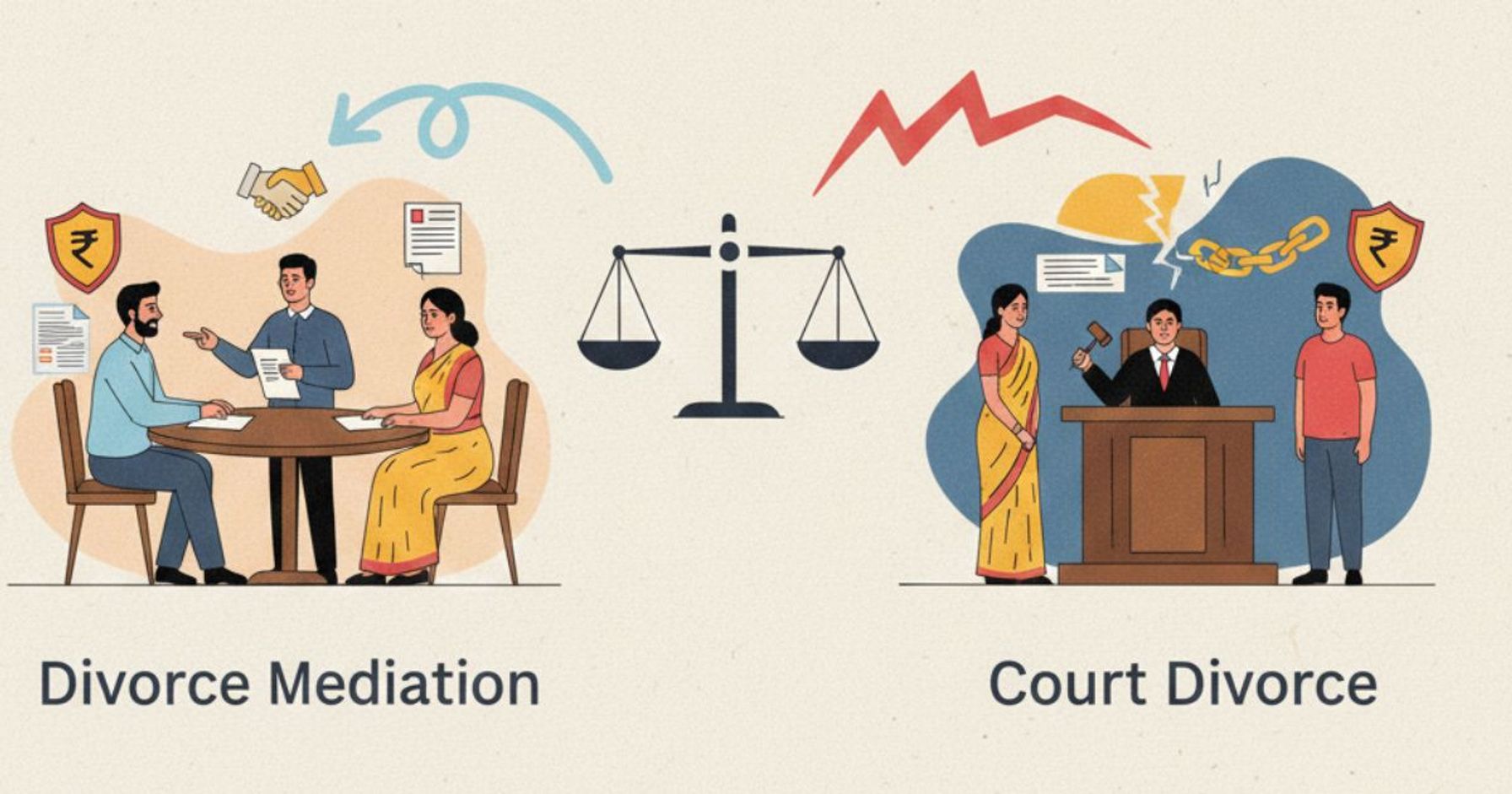
Divorce mediation is a process where both parties try to resolve disputes with the help of a neutral third party, known as a mediator. The mediator’s role is to facilitate discussion, encourage cooperation, and help both sides reach a mutually acceptable understanding.
Mediation usually focuses on:
- Open communication
- Mutual consent
- Privacy
- Reducing emotional strain
The process is generally less formal than court proceedings and relies heavily on cooperation between both individuals.
What Is Court Divorce?
Court divorce involves formal legal proceedings where disputes are presented before a judge. Each party may have legal representation, and decisions are made through court hearings, submissions, and legal arguments.
Court divorce is commonly chosen when:
- Disagreements are significant
- Communication has broken down
- Mutual consent is not possible
- Legal clarity is required on complex matters
This approach follows a structured legal process.
Key Differences Between Divorce Mediation and Court Divorce
Understanding how these two approaches differ can help couples evaluate which path aligns better with their situation.
1. Communication Style
In mediation, communication is encouraged directly between both parties, with guidance from the mediator. The goal is to reduce conflict and find common ground.
In a court divorce, communication usually happens through legal representatives, and discussions are more formal and structured.
2. Level of Control
Mediation allows both individuals to actively participate in shaping outcomes. Decisions are discussed and agreed upon mutually.
In court divorce, outcomes are largely determined by legal procedures and judicial decisions, which may feel less flexible.
3. Emotional Impact
Mediation is often perceived as less emotionally exhausting because it aims to reduce confrontation and encourage respectful dialogue.
Court divorce can feel more stressful for some individuals due to adversarial proceedings, repeated hearings, and prolonged uncertainty.
4. Privacy and Confidentiality
Mediation discussions are generally private and confidential, which many couples find reassuring.
Court divorce proceedings are part of the legal system, where documentation and hearings follow formal records.
5. Flexibility in Resolution
Mediation allows flexibility in discussing solutions that suit both parties’ personal circumstances.
Court divorce follows legal frameworks strictly, which may limit flexibility in certain situations.
When Divorce Mediation May Be Considered
Some couples explore mediation when:
- Both parties are open to discussion
- They want to avoid prolonged conflict
- Privacy is important
- Children or family relationships are involved
- They wish to maintain respectful communication
Mediation works best when both individuals are willing to participate honestly.
When Court Divorce May Be Necessary
Court divorce may be considered when:
- One party does not agree to mediation
- Disputes are highly contentious
- There are serious disagreements on finances or custody
- Legal intervention is required for protection or clarity
In such cases, formal legal proceedings may provide structure and enforceability.
Common Misunderstandings About Mediation and Court Divorce
“Mediation means giving up legal rights”
Mediation focuses on discussion, not surrendering rights.
“Court divorce always means hostility”
While formal, some cases proceed respectfully with legal guidance.
“One approach is better for everyone”
The right approach depends on individual circumstances.
Role of Legal and Professional Guidance
Many individuals seek professional guidance to:
- Understand available options
- Clarify legal implications
- Reduce emotional stress
- Choose the most suitable path
Professional support does not guarantee outcomes but helps individuals navigate the process with clarity.
Choosing What’s Right for You
There is no single correct answer when choosing between divorce mediation and court divorce. The right approach depends on:
- Nature of disputes
- Willingness to communicate
- Emotional readiness
- Need for legal intervention
Taking time to understand both options often leads to more thoughtful decisions.
Conclusion
Divorce mediation and court divorce are two distinct paths designed to address the same goal, legal separation, but in very different ways. Mediation focuses on cooperation and communication, while court divorce follows formal legal procedures.
Understanding these differences allows individuals to choose an approach that aligns with their emotional, legal, and practical needs. During such an important life transition, informed choices can make the journey more manageable and less overwhelming.